Author Guidelines
TITLE
The manuscript title must be written in English and should be clear, informative, concise, and specific, accurately reflecting the main focus and content of the study. The title should consist of 15 words and include the main variables or key concepts investigated in the research without using unnecessary abbreviations or overly general expressions. The title must be formatted using Arial, 12-point, bold font, with single-line spacing (1.0).
Abstract and Keywords
The Abstract should provide a concise, accurate, and self-contained summary of the manuscript. It should enable readers to understand the purpose, methodology, principal findings, and significance of the study without referring to the full text. The abstract must be written in English, consist of 150–250 words, and be presented as a single paragraph without headings, citations, references, tables, figures, equations, or undefined abbreviations. For original research articles, the abstract should briefly include: (1) background or rationale of the study, (2) research objective, (3) methods, including study design, participants or samples, and analytical approach, (4) principal results with the most important quantitative findings where appropriate, and (5) the main conclusion highlighting the scientific significance or practical implications of the study. The abstract should accurately reflect the content of the manuscript without introducing information that is not presented in the main text. Statements should be written in clear, concise, and objective language to facilitate indexing and retrieval in international databases. Following the abstract, authors should provide 3–5 keywords that are relevant to the manuscript, preferably using standardized scientific terminology and avoiding unnecessary repetition of words already included in the title.
1. INTRODUCTION
The Introduction should establish the scientific context of the study and clearly explain why the research was conducted. It should begin with a concise overview of the current state of knowledge, supported by recent and relevant literature, followed by a clear identification of the research problem or knowledge gap that remains unresolved.
Authors should critically review previous studies rather than merely describing them, demonstrating how existing evidence relates to the current research. The introduction must clearly present the theoretical or conceptual framework underpinning the study and explain the significance of the research in advancing scientific knowledge or professional practice.
The final paragraph of the Introduction should explicitly state the research gap, novelty, research objectives, and, where appropriate, the research hypotheses or research questions. The novelty should clearly explain how the study differs from or extends previous research in terms of concepts, methods, analytical approaches, populations, interventions, technologies, or empirical evidence.
The Introduction should be focused and concise, avoiding an extensive literature review or discussion of research findings. Whenever possible, authors are encouraged to cite recent, peer-reviewed literature published within the last 10 years, while seminal references may be included when scientifically justified.
2. METHODS
The Methods section should provide a clear, systematic, and sufficiently detailed description of the study to enable its replication by other researchers. Authors should describe the research design and justify its appropriateness in relation to the study objectives. This section should include the study setting and period, study population, sample size, sampling technique, inclusion and exclusion criteria, and the characteristics of the participants or research objects.
Authors should clearly define all research variables, interventions, exposures, or outcomes, including their operational definitions, measurement procedures, and assessment criteria where applicable. Detailed information on the materials, instruments, equipment, or software used in the study should be provided, together with evidence of instrument validity and reliability when relevant. The procedures for data collection should be described sequentially to ensure transparency and reproducibility.
The statistical or qualitative data analysis methods should be explained comprehensively, including the analytical techniques employed, assumptions or model specifications where appropriate, statistical software or analytical tools used (including version), and the level of statistical significance. For qualitative research, authors should describe the analytical framework, coding procedures, and strategies used to ensure the trustworthiness and rigor of the findings.
For studies involving human participants or animals, authors must include a statement of ethical approval, specifying the name of the institutional ethics committee, the ethical approval number, and confirmation that the study was conducted in accordance with relevant ethical guidelines and regulations. Where applicable, authors should also state that informed consent was obtained from all participants or their legal guardians before data collection.
If established reporting guidelines are applicable (e.g., CONSORT, STROBE, PRISMA, CARE, ARRIVE, or COREQ), authors are encouraged to prepare and report their manuscripts in accordance with the appropriate guideline.
The Methods section should provide sufficient methodological detail to ensure transparency, reproducibility, and scientific rigor while allowing other researchers to replicate the study under similar conditions.
3. RESULTS AND DISCUSSION
The Results and Discussion section should present the research findings systematically and provide a critical scientific interpretation of the results in relation to the research objectives, hypotheses, or research questions. Results should be presented in a logical sequence using text supported by tables, figures, graphs, or other relevant illustrations where appropriate. Authors should emphasize the key findings without duplicating data already presented in tables or figures. All tables and figures must be numbered consecutively, include clear and informative titles, and be cited in the text. Statistical results should be reported completely, including relevant statistical parameters such as effect sizes, confidence intervals, p-values, and other measures appropriate to the analytical methods employed.
The Discussion should focus on interpreting the significance of the findings rather than simply restating the results. Authors should explain how the findings address the research objectives and contribute to the existing body of knowledge. The discussion should relate the findings to relevant theories, concepts, or models and critically compare them with previous studies, highlighting agreements, inconsistencies, and possible explanations for any differences. Such explanations should be supported by scientific evidence and current literature while considering methodological differences, sample characteristics, research settings, and other relevant factors.
Authors are expected to clearly demonstrate the scientific contribution and novelty of the study. The novelty may arise from new concepts, methods, analytical approaches, models, instruments, interventions, technologies, or empirical evidence that advance knowledge in the field. The discussion should also describe the theoretical, practical, clinical, technological, environmental, or policy implications of the findings whenever appropriate.
The limitations of the study should be acknowledged objectively and discussed in terms of their potential influence on the interpretation and generalizability of the findings. Authors are encouraged to provide recommendations for future research based on these limitations.
The Results and Discussion section should demonstrate critical thinking, scientific reasoning, and the ability to synthesize evidence rather than merely describing previous studies. The discussion should be analytical, balanced, and evidence-based, highlighting the significance of the findings and their contribution to the advancement of scientific knowledge and professional practice. Excessive citation of the literature without critical interpretation should be avoided.
Example Table and Figure:
Table 1. Distribution of ….

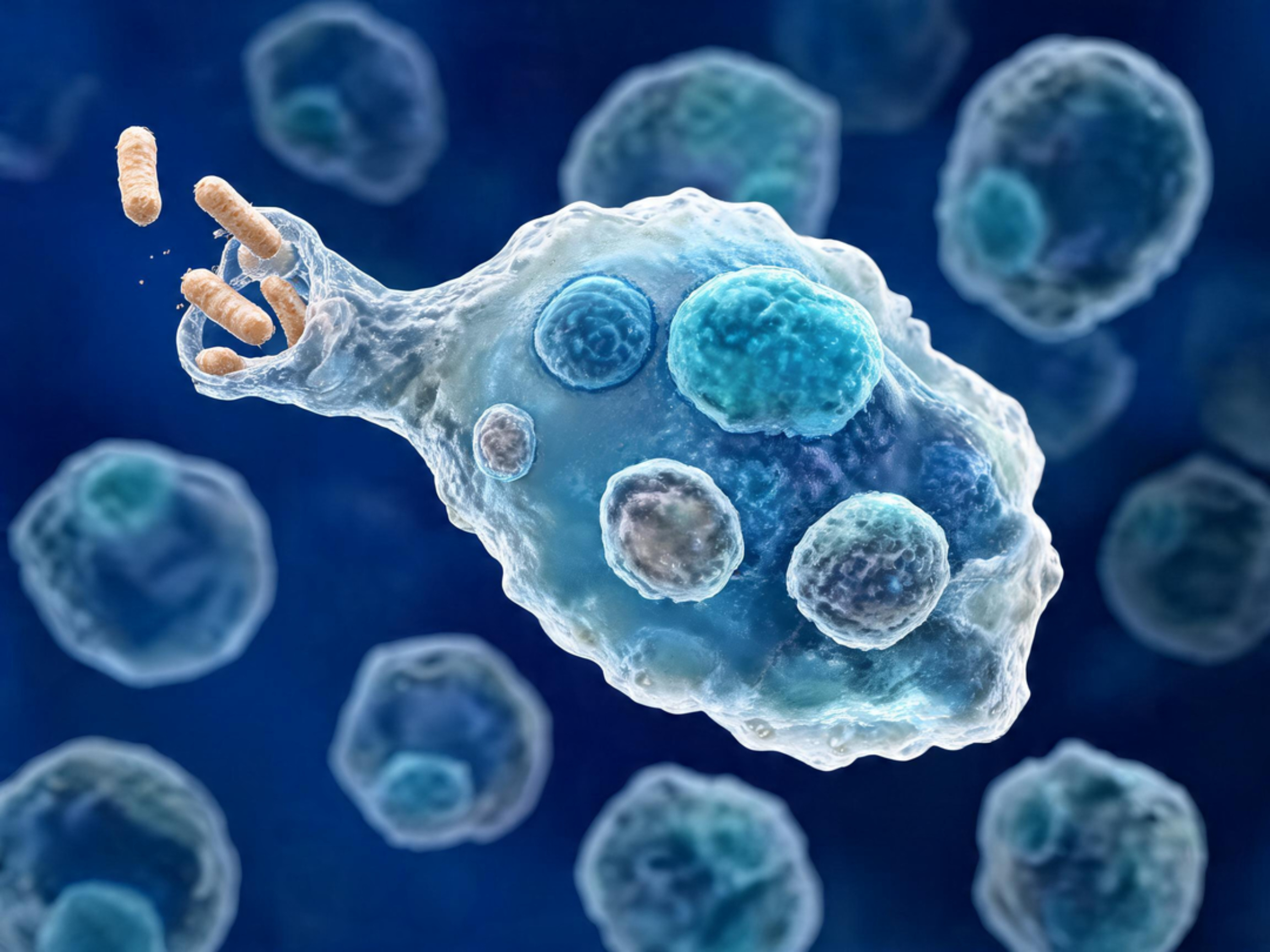
Figure 1. Makrofaq
4. CONCLUSION
The Conclusion should provide a concise and clear summary of the main findings of the study without repeating the discussion. It should directly address the research objectives, research questions, or hypotheses and emphasize the scientific contribution and significance of the findings. The conclusion must be based solely on the results presented in the manuscript and should not introduce new data, interpretations, or references.
The Conclusion should be written in one concise paragraph, without numbering or bullet points, using clear, logical, and objective language. It should highlight the key message of the study and, where appropriate, briefly indicate its theoretical, practical, clinical, technological, environmental, or policy implications.
If recommendations are provided, they should be presented in a separate paragraph immediately following the conclusion, without creating a new heading or subsection. Recommendations should be directly derived from the research findings, reflect the study's implications and limitations, and clearly indicate the intended beneficiaries or future directions for research, policy, or professional practice. Recommendations should be written in narrative form rather than as a numbered or bulleted list.
CONFLICT OF INTEREST
Authors must disclose any financial, personal, institutional, or professional relationships that could be perceived as influencing the research or its interpretation. If no competing interests exist, authors should state: "The authors declare that they have no competing interests." Full disclosure of potential conflicts helps ensure the transparency, credibility, and integrity of the published research.If none exist, state:"The authors declare no conflict of interest."
AUTHOR CONTRIBUTIONS
Authors are required to clearly specify their individual contributions to the research and manuscript preparation. Contribution statements should accurately reflect each author's role in the conception and design of the study, data collection, analysis and interpretation, manuscript drafting or revision, and final approval of the version to be published. This statement promotes transparency, accountability, and responsible authorship in accordance with internationally recognized publication ethics.
ACKNOWLEDGEMENT
Acknowledgments are conveyed to appropriate parties, especially to the institution or person who is actually assisting the research, for example: to the donor, facilities, materials or advice. Do not give thanks to one of the authors.
FUNDINGAuthors should disclose all sources of financial support for the research, including the name of the funding agency, grant number, or contract number, where applicable. Authors should also state whether the funding body had any role in the study design, data collection, data analysis, interpretation of results, manuscript preparation, or the decision to publish. If the research received no external funding, authors should state: "This research received no external funding."
DECLARATION OF ARTIFICIAL INTELLIGENCE USEAuthors must transparently disclose any use of generative artificial intelligence (AI) or AI-assisted technologies during manuscript preparation. AI tools may only be used to improve language, grammar, readability, or manuscript organization and must not replace the authors' intellectual contributions, scientific judgment, or responsibility for the content. Authors remain fully accountable for the accuracy, originality, and integrity of the manuscript. Any use of AI-assisted technologies should be clearly declared in this section.
REFERENCES
The reference list must contain only sources cited in the manuscript and be arranged alphabetically according to the APA (American Psychological Association) 7th Edition referencing style. All references must be written completely and accurately, ensuring consistency between in-text citations and the reference list. Authors are strongly encouraged to use reference management tools (e.g., Mendeley, Zotero, EndNote, or other compatible reference management software) to ensure the accuracy, consistency, and proper formatting of citations and references.
At least 80% of the references should be derived from literature published within the last 10 years, and at least 80% should consist of primary sources, particularly original research articles published in peer-reviewed journals or official research reports. Authors are encouraged to cite relevant articles previously published in the International Medical Scientific Journal whenever appropriate and relevant to the manuscript.
Examples of References (APA 7th Edition)
1. Journal Article
Format
Author, A. A., Author, B. B., & Author, C. C. (Year). Title of the article. Journal Name, Volume(Issue), xx–xx. https://doi.org/xxxxx
Example
Smith, J. A., Brown, P. R., & Wilson, K. T. (2024). The impact of health literacy on diabetes management. International Journal of Public Health, 18(2), 145–156. https://doi.org/10.1234/ijph.2024.01802
2. Book
Format
Author, A. A. (Year). Title of the book (Edition). Publisher.
Example
Creswell, J. W., & Creswell, J. D. (2018). Research design: Qualitative, quantitative, and mixed methods approaches (5th ed.). SAGE Publications.
3. Book Chapter
Format
Author, A. A. (Year). Title of chapter. In E. E. Editor (Ed.), Book title (pp. xx–xx). Publisher.
Example
Polit, D. F., & Beck, C. T. (2021). Evidence-based nursing research. In J. W. Creswell (Ed.), Research methodology in health sciences (pp. 75–102). SAGE Publications.
4. Conference Proceedings
Format
Author, A. A. (Year). Title of paper. In Proceedings title (pp. xx–xx). Publisher. DOI/URL
Example
Rahman, A., Putra, D., & Sari, N. (2023). Artificial intelligence in healthcare. In Proceedings of the 5th International Conference on Health Informatics (pp. 120–128). IEEE. https://doi.org/10.1109/ICHI.2023.123456
5. Website
Format
Organization/Author. (Year). Title of webpage. URL
Example
World Health Organization. (2024). Hypertension. https://www.who.int/news-room/fact-sheets/detail/hypertension
Note: Authors are encouraged to use recent, relevant, and high-quality references from peer-reviewed journals. At least 80% of the references should be primary research articles published within the last 10 years. Authors should avoid excessive self-citation, unnecessary citation of the same source, references from predatory journals, or citations that are not directly relevant to the research topic. References should accurately reflect current scientific developments and provide strong support for the scientific arguments presented in the manuscript.